
Social Media Marketing

Conversion tracking helps businesses measure leads, calls and sales from Google Ads

What Is Conversion Tracking? Why Your Ads Need It Before You Spend More. 

You are running Google Ads, getting clicks, and spending money every month. But do you know how many of those clicks actually turn into enquiries, calls, bookings, or customers? Conversion tracking helps answer that question. Instead of looking only at clicks and impressions, you can see which actions from your ads are actually helping your business.  What Is Conversion Tracking and Why Does It Matter?  Conversion tracking is the process of measuring valuable actions people take after interacting with your advertisement. These actions can include submitting a form, making a purchase, calling your business, requesting a quote, or booking a service.  For example, imagine you are running Google Ads for a real estate project. Your campaign receives 200 clicks, but only 15 people submit an enquiry. Without proper tracking, you may only see those 200 clicks and assume the campaign is performing well.  However, conversion tracking gives you a clearer picture of what happens after those clicks.  Why Are Clicks Alone Not Enough?  Clicks can show that people are interested in your advertisement. However, they do not always mean that people are interested in buying from you.  Consider two campaigns:  Campaign A:  300 clicks → 8 enquiries  Campaign B:  150 clicks → 20 enquiries  At first, Campaign A may look better because it received more clicks. However, Campaign B is generating more enquiries with fewer clicks.  Therefore, looking only at clicks can lead to the wrong decision.  What Should Your Business Track with conversion Tracking?  Every business can have different conversion goals.  For example, a real estate company may want to track:  Similarly, an e-commerce business may focus on:  For a service business, useful conversions could include contact forms, WhatsApp enquiries, calls, and appointment bookings.  The key is to track actions that have real value for your business.  How Does Conversion Tracking Improve Your Ads?  Once Google Ads conversion tracking is set up correctly, your advertising data becomes much more useful.  You can then identify which campaigns generate enquiries, which keywords bring valuable visitors, and which ads are not producing meaningful results.  As a result, you can make better decisions about where to use your advertising budget.  Google also uses conversion data to help optimise certain campaigns and bidding strategies. This makes accurate conversion tracking important not only for reporting, but also for campaign optimisation.  What Happens When Ads Are Not Tracked?  Without proper tracking, you may know how much you spent and how many people clicked your ads. However, you may not know what happened after those clicks.  As a result, you could increase the budget of a campaign that gets many clicks but very few enquiries.  At the same time, another campaign might generate better leads but receive less budget because its results are not being measured properly.  How To Check Your Conversion Tracking Before Spending More?  Before increasing your advertising budget, check whether:  Most importantly, make sure your tracking reflects the actions that actually matter to your business.  Final Takeaway  Clicks tell you that someone interacted with your advertisement. Conversions tell you whether that interaction created a valuable business action.  Therefore, before spending more on Google Ads, make sure you know what your advertising is actually producing.  At VONE Digitals, we help businesses build measurable digital marketing campaigns that focus not only on clicks, but also on the actions that contribute to real business growth.  Don’t just ask how many people clicked. Ask what happened after the click. 

What Is Conversion Tracking? Why Your Ads Need It Before You Spend More.  Read More »
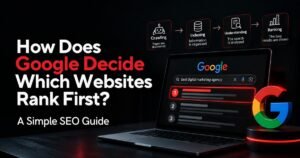
Search Engine Optimization (SEO): How Google Ranks Websites 

  Search Engine Optimization (SEO) helps search engines understand what a website is about, which pages are useful, and how relevant they are to a person’s search. When millions of web pages are available, why does one website appear above another? Imagine searching for “best digital marketing agency in Vijayawada.” Within seconds, Google shows several results. But Google is not searching the entire internet at that exact moment. So, what happens behind the search? How Search Engine Optimization (SEO) Helps Google Rank Websites  Google first discovers web pages through crawling. The information is then processed and stored in its index. When a search is made, Google’s systems look through this index and select pages that may be useful for that particular search.  This process can be simplified as:  Crawling → Indexing → Understanding → Ranking  Having a website does not automatically mean that every page will appear in Google.  Google First Tries to Understand Your Search  Google needs to understand what the person is actually looking for.  For example:  “digital marketing”  and  “how much does digital marketing cost for a small business?”  may contain similar words, but the intent is different.  The first search is broad. The second asks for specific information.  This is called search intent.  Good SEO is therefore not only about using keywords. It is also about understanding the question behind the search.  Google Looks for Relevant and Helpful Information  After understanding the search, Google looks for pages that match it.  Keywords still help Google understand what a page is about. But simply repeating a keyword many times does not make a page better.  A useful page should answer the search clearly and provide information that is relevant to the reader.  Google also considers the overall quality of the content. Original information, useful explanations, experience, expertise and trust can all contribute to how a page is evaluated.  This is where E-E-A-T — Experience, Expertise, Authoritativeness and Trustworthiness — becomes useful as a way to think about content quality.  Other Signals Also Matter  Content is only one part of SEO.  Google can also consider factors such as:  There is no single “SEO score” that guarantees the first position.  Different searches can produce different results because Google’s systems consider the context of each query.  Why Might a Website Not Appear on Google?  A page may not appear because it has not been indexed, cannot be crawled properly, does not match the search intent, has weak or unhelpful content, or faces strong competition.  Sometimes the problem is technical.  Sometimes the content simply does not provide the answer Google believes the searcher needs.  So the first question should not always be:  “Why am I not ranking?”  It can be:  “Can Google find, understand and index my page?”  Is SEO Still Important in 2026?  Search is changing.  With AI Overviews and AI Mode, Google is becoming more conversational and can provide information in new ways.  But the basic SEO foundation still matters.  Google continues to emphasize important fundamentals such as crawlability, indexability, useful content and strong technical foundations.  Search is changing, so SEO is changing with it.  SEO Is About Being Understandable  SEO is not simply about trying to trick Google into ranking a website.  Good SEO helps Google understand what a website is about, who its content is for and whether its pages are relevant to a search.  Every Google search starts with a question.  SEO helps your website become a clear, useful answer to that question.  If you want to understand how well your website is prepared for modern search, VONE Digitals can help evaluate its SEO foundation and identify areas for improvement. 

Search Engine Optimization (SEO): How Google Ranks Websites  Read More »

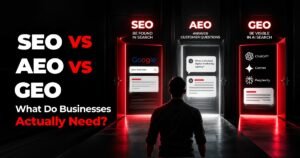
SEO vs AEO vs GEO showing how businesses can improve visibility across search and AI platforms.

SEO vs AEO vs GEO: What Do Businesses Actually Need? 

SEO vs AEO vs GEO: What do businesses actually need? Your customers are searching for answers. But are they finding your business or someone else’s?  For years, businesses focused on one question: “How do I rank on Google?”  Today, search is changing.  People still search on Google, but they also ask AI tools questions, look for direct answers, compare businesses, and research before they ever visit a website.  That is why terms like SEO, AEO and GEO are suddenly everywhere.  But what do they actually mean for a business?  And more importantly, do you really need all three?  SEO vs AEO vs GEO: What Has Actually Changed?  Imagine someone searching:  “Digital marketing agency near me”  This is where SEO (Search Engine Optimisation) matters. The goal is to help your website appear when people search for products, services or information related to your business.  Now imagine someone asking:  “What should I check before hiring a digital marketing agency?”  Here, the focus is on giving a clear and useful answer. This is where AEO (Answer Engine Optimisation) becomes relevant.  Then consider someone asking an AI tool  “Which digital marketing agencies can help a small business with SEO and paid advertising?”  The way businesses are discovered can become different again.  This is where GEO (Generative Engine Optimisation) comes into the conversation.  The terminology is still evolving, but the goal is simple  Make your business easier to find, understand and trust.  So, What Is the Difference Between SEO, AEO and GEO?  Think of them as parts of the same visibility journey.  They are not three separate strategies you must handle independently.  In many cases, strong fundamentals support all three.  Does GEO Mean SEO Is Dead?  No.  This is one of the biggest misunderstandings businesses can have.  A website still needs useful content, good technical foundations, relevant information and a clear connection to what customers are searching for.  What is changing is the way people discover and consume that information.  So instead of abandoning SEO every time a new search trend appears, businesses should think beyond rankings.  These questions matter increasingly in modern search.  What Should Businesses Actually Focus On?  Start with the fundamentals.  Create useful content around the questions your customers genuinely ask. Explain your services clearly. Share real expertise instead of filling pages with generic information.  And don’t create content simply because “AI might pick it up.”  Create content because your customer needs it.  When your website, content and overall online presence consistently show expertise and provide useful information, your business becomes easier for both people and search systems to understand.  The Future of Search Is Not About Choosing One  The real question isn’t:  “Should I invest in SEO, AEO or GEO?”  It is:  “When my customer searches for a solution, can they discover my business wherever that search happens?”  Search may continue to change. New platforms and technologies may appear.  But one thing remains important:  Businesses need to be found, understood and trusted before they can be chosen.  That is where a strong digital visibility strategy matters.  SEO may get you discovered. Useful answers can build trust. And a strong digital presence can help your brand stay visible as search evolves.  If you want, we can review your current website and content and suggest a simple plan to improve your visibility across search and AI. Message us or book a free call to discuss how this could work for your business. 

SEO vs AEO vs GEO: What Do Businesses Actually Need?  Read More »

Customer retention and the importance of maintaining relationships with existing customers while finding new customers.

You’re Busy Finding New Customers. But What About the Ones You Already Have? 

You’re Busy Finding New Customers. But What About the Ones You Already Have? Every month, you spend money on ads, create social media posts, and try different ways to bring new people to your business. When a new customer makes a purchase, it feels like a small win.  But what happens after that first sale?  Does the customer come back? Do they remember your business when they need the same service again? Or have you already moved on to finding the next customer?  This is where many businesses miss an opportunity. Attracting new customers is important, but maintaining relationships with existing customers matters just as much. In fact, acquiring a new customer can cost 5–25× more than keeping an existing one, and even a small increase in retention can significantly boost profits.forbes+1  You’re Finding New Customers. But Are You Taking Care of Existing Customers?  Imagine you run a clothing store.  A customer visits, buys a dress, and leaves happy. A few weeks later, they may need another outfit. However, they might not remember your store or know about your new arrivals.  Meanwhile, you are spending money to attract another first-time buyer.  The previous customer already knows your store. They have experienced your service and made a purchase. Yet, if no relationship is maintained, they may choose another shop next time.  Whether you run a shop on MG Road, a clinic in Patamata, or a coaching centre near Benz Circle, this situation is very common. The problem is not always a lack of new customers. Sometimes, the relationship with existing customers is simply being forgotten.  Why Do Customers Buy Once but Never Return?  There can be several reasons why a customer does not make another purchase.  Sometimes, the product or service did not meet their expectations. In other cases, they may have found a more convenient option elsewhere.  However, some customers simply move on because they no longer hear from your business.  For example, a customer who purchased a service may appreciate a simple follow-up asking about their experience. Similarly, someone who bought a product may be interested in related offers or useful updates.  When communication stops after the first sale, an opportunity to build a lasting customer relationship may be missed.  How Customer Retention Can Support Business Growth  Finding new customers will always be part of business growth. At the same time, existing customers should not be overlooked.  Here are a few simple ways to maintain those relationships:  These small efforts can help strengthen customer relationships and support repeat business. For many businesses, even a modest improvement in repeat purchases can make a big difference to monthly revenue.  Stop Focusing Only on Finding New Customers  Before planning your next marketing campaign, take a moment to look at your existing customer list.  These questions can reveal opportunities that may have been overlooked.  Final Thoughts  New customers bring fresh opportunities. However, existing customers already have a connection with your business.  Customer retention is not just about getting another sale. It is about giving people a reason to choose your business again.  So, while you plan how to attract your next customer, remember the people who have already trusted you.  Because business growth is not only about who comes in. It is also about who comes back.  If you’d like, we can help you design a simple 30‑day customer retention plan using WhatsApp, email, and basic automation. Message us or book a free call to discuss how this could work for your business in Vijayawada 

You’re Busy Finding New Customers. But What About the Ones You Already Have?  Read More »

Brand recognition Why some brands more memorable.

Your Competitor Posts Less. But Somehow, Everyone Knows Them. 

Your Competitor Posts Less. But Somehow, Everyone Knows Them .You are posting regularly, creating reels, sharing offers, and keeping your social media active. Still, when customers think about businesses in your industry, your competitor’s name comes to mind first.  The difference may not be how often you post. It could be brand recognition how easily customers remember and connect your business with a particular message, look, or experience.  How Consistency Builds Brand Recognition  Strong brand recognition does not happen because a business posts every day. It develops when customers repeatedly see a familiar message, visual style, and communication pattern. Over time, this consistency can strengthen brand recognition and make your business easier to remember.  That should address the density issue without keyword stuffing  Posting More Does Not Always Build a Brand  Many businesses measure social media consistency by the number of posts published each month.  The usual question is:  “Did we post today?”  However, there is another question worth asking:  “Did today’s post strengthen our brand?”  For example, one post may share a motivational quote, while another promotes an offer. The next one might follow a trending topic. Each post can look good on its own. However, if there is no connection between them, customers may struggle to understand what the brand stands for.  Therefore, a busy content calendar does not automatically create a memorable brand.  Your Competitor May Be Repeating the Right Things  Your competitor may post only three times a week. Even so, their content could be built around a few strong ideas that customers see repeatedly.  For example, their content may use:  The posts do not need to look exactly the same. Instead, they should feel like they come from the same brand.  As a result, customers can recognise the business faster.  People Should Recognise Your Brand Before They Read the Name  Think about the brands you recognise within a few seconds. Sometimes, the name is not even visible, yet you already know which brand it is.  This happens because certain elements become familiar over time. Colours, fonts, visual style, and communication patterns all play a role.  For your business, the same recognition can be built through consistency. Keep important brand elements similar across your website, social media posts, advertisements, and other marketing channels.  Stop Trying to Make Every Post Look Different  Creativity matters. At the same time, constant change can make your brand harder to remember.  If your colours change every week, your fonts keep changing, and every post follows a different style, customers may not connect those posts with one business.  Your content does not have to look identical. It simply needs to feel like it belongs to the same brand.  Ask What You Want Customers to Remember  Before planning next month’s content, ask yourself one simple question:  “What should customers remember about our brand?”  That answer can guide your content strategy.  Choose a few strong themes and communicate them in different ways. Reels, carousels, stories, and posts can all reinforce the same ideas without becoming repetitive.  Final Thoughts  Your competitor may not be remembered because they post more. Instead, they may simply be easier to recognise.  Visibility gets attention. Recognition builds familiarity. Being remembered keeps your brand in the customer’s mind.  So, before asking:  “How can we post more?”  Ask a better question:  “What are we giving people a reason to remember?” 

Your Competitor Posts Less. But Somehow, Everyone Knows Them.  Read More »

People clicking ads but no enquiries.

People Are Clicking Ads But No Enquiries? Here’s What to Check 

People clicking ads but no enquiries is a common problem for businesses running Google Ads, Meta Ads, or other paid campaigns. You may see clicks increasing in your ad account, but your phone is not ringing and your WhatsApp messages are still quiet. This can be confusing because the ad seems to be working. But a click only means someone showed interest. It does not mean they are ready to contact your business.  People Are Clicking Ads But No Enquiries? Check What Happens After the Click  The biggest mistake is looking only at the number of clicks. What happens after the click matters more. A person may click your ad, visit your website, look around for a few seconds, and leave without taking any action.  Your landing page needs to continue the same message that attracted them to the ad. If the ad says “Get a Free Consultation” but the landing page does not clearly explain how to get it, the visitor may leave.  The page should quickly answer three questions:  What are you offering? Why should I trust you? What should I do next?  Your Ad May Be Getting Clicks From the Wrong Audience  Not every click is a useful click.  Your ad may attract people who are curious but have no intention of buying. This can happen when your targeting is too broad or when your ad message does not clearly explain what you offer.  For example, if you provide premium interior design services, an ad showing only “Beautiful Home Interiors” may attract many people looking for inspiration. A more specific message about premium interior design packages can help set the right expectation before they click.  The goal is not simply to get more clicks. The goal is to attract people who have a genuine business need.  Make the Next Step Easy  Once someone reaches your website or landing page, do not make them search for the next step.  Your CTA should be clear and easy to find.  Depending on your business, it could be:  Get a Free Quote   Book a Consultation   Call Now  Enquire on Whatsapp  Request a Callback   Avoid giving visitors too many options. One clear action can make the journey easier.  Trust Can Decide Whether Someone Enquires  People may click your ad but hesitate before sharing their details.  This is where trust becomes important.  Add genuine customer reviews, testimonials, business experience, certifications, project photos, or other relevant proof. If possible, show real information about your business instead of making the page look like a generic sales page.  A visitor should feel comfortable taking the next step.  Your Ad and Landing Page Should Match  Think of your ad and landing page as one conversation.  If your ad talks about one service, the landing page should immediately continue that message. If the visitor has to search through multiple sections to find what they clicked for, you may lose the enquiry.  Keep the message, offer, pricing information, and CTA consistent wherever possible.  Track What Happens After the Click  Do not stop your analysis at clicks.  Check how many people are visiting the page, how long they stay, how many contact forms are submitted, how many calls happen, and how many WhatsApp enquiries you receive.  This helps you identify where people are dropping off.  Final Thoughts  Getting clicks is only the first step. People clicking ads but no enquiries usually means there is a gap between the ad and the customer journey.  Before increasing your ad budget, check your targeting, landing page, message, trust signals, CTA, and conversion tracking. Fixing these areas can help you get more value from the traffic you are already paying for. 

People Are Clicking Ads But No Enquiries? Here’s What to Check  Read More »

mage Alt Text: Marketing funnel showing many leads but only a few potential customers

Low Quality Leads, Why your Enquiries Are Not Converting?

Low Quality Leads, Why your Enquiries Are Not Converting?Your ads may be generating enquiries, your website may be receiving form submissions, and your sales team may be getting regular calls. Still, many of these leads may not become paying customers. This can be frustrating when money is being spent on marketing but sales are not improving. In many cases, the problem is not the number of leads. It is the quality and relevance of those leads.  You Are Getting Leads, But Are They the Right Leads for Your Business?  Every enquiry cannot be considered a customer who is ready to purchase. Some people may only be checking prices, comparing businesses, collecting information, or exploring their options.  For example, a real estate company may receive enquiries from people who are only checking property prices. A training institute may receive messages from students who are not ready to join. A salon may get enquiries from people who are looking for services at a much lower price.  These leads are not always useless, but they may not be ready to buy immediately. The main goal should be to attract people who genuinely match your service, location, budget, and requirements.  Your Ad Message May Be Attracting the Wrong Audience  The message used in an advertisement plays an important role in determining the type of leads received.  When an ad focuses only on discounts, free offers, or low prices, people who are interested only in the offer may be attracted. They may not understand the actual value of the product or service.  Your ad should clearly explain:  Clear messaging helps reduce irrelevant enquiries and attracts people who are more likely to need your service.  Your Landing Page Should Set Clear Expectations  Sometimes, the problem starts after a person clicks on an advertisement. If the landing page does not provide enough information, the wrong expectations may be created.  A useful landing page should explain the service, benefits, process, location, and next steps. Testimonials, FAQs, relevant images, and clear contact options can also help visitors understand the offer before submitting their details.  When important information is missing, people may submit an enquiry without fully understanding what is being offered. This can result in leads that are not suitable for the business.  Lead Qualification Can Save Time and Money  Basic qualification questions can help a business understand whether an enquiry is relevant. Depending on the industry, useful questions may include:  These questions should be simple and relevant. The purpose is not to make the enquiry process difficult. It is to understand the customer’s needs before the sales team spends time on follow-up.  Fast Follow-Up Can Improve Conversions  Even a genuine lead may lose interest if the response is delayed. Enquiries should be answered quickly with useful and relevant information.  Instead of only asking, “Are you interested?”, the conversation should focus on the customer’s requirement, answer their questions, and explain the next step.  Businesses should also track qualified leads, appointments, follow-ups, and actual conversions. This helps identify which campaigns are bringing meaningful business.  Final Thoughts  You are getting leads, but why are most of them not ready to buy? The reason may be connected to targeting, ad messaging, landing page information, lead qualification, or follow-up.  A successful marketing campaign should not focus only on generating more leads. It should attract the right audience, set clear expectations, and support the sales process. When lead quality is improved, marketing efforts become more useful, measurable, and connected to real business growth. 

Low Quality Leads, Why your Enquiries Are Not Converting? Read More »

Business owner checking an online business listing but not getting customers

My Business Is Online, But Why Am I Still Not Getting Customers? 

My business is online, but why am I still not getting customers? You may have a website, a Google Business Profile, and active social media pages, yet calls, messages, and enquiries may still be limited. This can be frustrating, especially when time and money have already been invested in digital marketing. The problem may not be your online presence alone. It may be how clearly your business is presented and how easily customers can take the next step.  My Business Is Online, But Is It Giving Customers Enough Reasons to Contact Me?  Being online does not automatically mean customers will choose your business. When people find your business through Google, social media, or your website, they usually look for quick answers before making a decision.  They may want to know:  If these details are missing or difficult to find, potential customers may leave without making an enquiry.  Your Google Business Profile May Need More Attention  Your Google Business Profile is often one of the first places customers visit when they search for a local business. A profile with incomplete information, outdated photos, incorrect working hours, or limited reviews may not create enough confidence.  Make sure your profile includes:  For restaurants, salons, clinics, hospitals, shops, and service businesses, these details can influence whether a customer calls, visits, or moves to another option.  Customers Need More Than Just Your Business Name  Many businesses focus on displaying their name, logo, and contact number. But customers also need to understand what makes the business useful to them.  Your website and social media should clearly communicate your services, experience, process, location, and customer benefits. Real photos, service examples, testimonials, and frequently asked questions can help people understand what they can expect.  For example, a clinic can share its specialities, doctor information, appointment process, and location. A salon can display its services, work results, customer reviews, and booking options. Clear information reduces confusion and builds confidence.  Make It Easy for Customers to Take the Next Step  Even when customers are interested, they may not contact you if the next step is unclear.  Your website should make important actions easy to find. Include clear buttons such as:  These buttons should be visible on mobile devices as well as desktops. A customer should not have to search through several pages to find your phone number or enquiry form.  Your Social Media Should Support Your Business Goals  Regular posting is useful, but every post should have a purpose. Instead of sharing only promotional content, show customers what your business offers and why it can be trusted.  You can share:  When your website, Google Business Profile, and social media pages show consistent information, customers can understand your business more easily.  Final Thoughts  My Business Is Online, But Why Am I Still Not Getting Customers? Being visible online is only the beginning. Customers also need accurate information, trust, useful content, and a simple way to contact your business.  Your online presence should not only show that your business exists. It should help customers understand your value and feel confident taking the next step.  If your business needs a stronger online presence that is designed to generate real enquiries, VONE Digitals can help you improve your website, local SEO, Google Business Profile, social media, and lead-generation strategy. 

My Business Is Online, But Why Am I Still Not Getting Customers?  Read More »

How branding and online presence influence brand perception before customers contact a business

Before Customers Contact You, Your Brand Has Already Spoken 

Before customers contact you, your brand has already spoken. They may have found your business through Google, Instagram, a recommendation, or an online advertisement. Before making a call or sending a message, they may have already visited your website, checked your social media, or looked at your business photos.  At that stage, customers are already forming an impression of your business.  They may be asking themselves:  Your brand begins communicating long before your first conversation. Your website, social media, visuals, and messaging all create an impression of your business.  Before Customers Contact You, Your Online Presence Creates the First Impression  Many business owners believe the customer experience begins when someone calls or sends an enquiry. In reality, the first impression is often created much earlier.  Imagine a customer searching online for a service. They find two businesses offering similar solutions. One has a clear website, professional images, updated information, and consistent branding. The other has an outdated website, unclear details, and irregular social media activity.  Even before speaking to either business, the customer may feel more comfortable with the first one.  A good online presence does not guarantee sales, but it can encourage customers to take the next step. It can also reduce doubts and make your business easier to consider.  Your business may be judged by what customers see before they experience what you can do.  Customers Notice More Than Your Logo  Branding is not only about having a logo, colours, or attractive designs. It is also reflected in how your business communicates and presents itself.  Customers notice whether your services are explained clearly, whether your website is easy to use, and whether your business looks consistent across different platforms.  They may look at your:  When these elements are managed properly, your business can appear more organised and reliable. If they are neglected, the quality of your actual service may not be communicated effectively.  Your Website Should Answer Questions Before Customers Ask  A website should do more than display your company name and service list. It should help visitors understand your business without making them search for basic information.  Your website should clearly explain:  If important information is missing or difficult to find, visitors may leave without making an enquiry.  Your experience and expertise may be excellent, but they must be communicated clearly. A well-structured website helps your business explain its services, display proof of work, and guide visitors towards taking action.  Consistency Builds Familiarity and Trust  A customer may discover your business on Instagram, visit your website, and later check your Google Business Profile. If every platform looks and sounds different, your brand may feel disconnected.  Your platforms do not need to look identical. However, your logo, colours, tone, images, and messaging should create a consistent identity.  When a consistent brand experience is maintained, customers can recognise your business more easily. Familiarity is developed over time, and trust is strengthened through consistency.  How Can You Improve Your Online Impression?  Start by reviewing your business from a customer’s perspective.  Ask yourself:  Small improvements can make a meaningful difference. Website content can be updated, social media visuals can be improved, and unclear messaging can be rewritten.  Final Thoughts  Your brand is communicating even when you are not actively promoting your business.  Before customers contact you, they have already experienced your online presence through your website, social media, visuals, and messaging. These details influence how your business is understood and whether customers feel confident taking the next step.  A strong brand does not only look professional. It communicates professionalism before the first conversation begins.  At VONE Digitals, we help businesses build a consistent digital presence through branding, creative design, website development, and digital marketing. 

Before Customers Contact You, Your Brand Has Already Spoken  Read More »

Why ranking for the wrong keywords can hurt your business

Why Ranking for the Wrong Keywords Can Hurt Your Business

Ranking for the wrong keywords can bring visitors to your website without bringing real business. Your traffic numbers may look good, but the people visiting your pages may not be looking for the service you offer. This is where many businesses make a mistake with SEO. They focus on getting more visitors but forget to check whether those visitors may become customers. Ranking for the Wrong Keywords Can Bring the Wrong Audience Focusing on the wrong keywords may draw attention but won’t lead to business. Although the traffic might seem impressive in a report, those numbers mean little if the visitors do not need your service. For instance, suppose that you are in the business of designing websites and that your page draws in people who are searching for “how to create a free website”. These individuals might go to your page, read the information on it, and then leave since all they had wanted was a tutorial. The people visiting your site are real, but they might not be potential customers; This is why you should not judge website traffic only by it’s quantity. You also have to know who is visiting your website and what their actual intentions are. What happen’s when your keywords don’t match the service ? The wrong keyword can attract people who are interested in a topic but are not ready to purchase your service. For instance, an SEO company could appear in response to queries like “what SEO means” or “the definition of SEO”. This kind of search traffic can attract students, beginners, or those who are just trying to understand SEO. The traffic isn’t useless, but it won’t lead to a large number of enquiries if the business wishes to draw in customers who are ready to hire an SEO provider. A term like “SEO services for small businesses” or “SEO agency in Vijayawada” show stronger buying intent.People using these terms may already be comparing service providers. Search Intent Matters More Than Search Volume The number of searches tells you how many people search for a particular keyword, but it doesn’t show you how many of them are willing to get in touch with a business. A keyword that has a large number of searches can be of less value than one that has a smaller number of searches but greater buying intent. Consider the difference between these searches: What is digital marketing? Digital marketing agency for my business Digital marketing agency in Vijayawada The initial search is primarily for information, while the other two indicate that the person is more likely investigating a service. The most popular keyword isn’t necessarily the best one; it should be the one which links your business with the appropriate customer. How to Choose Better Keywords for Your Business Begin by putting yourself in your customer’s shoes. Before selecting a keyword, ask: What problem is the customer attempting to solve? What terminology would they employ when carrying out the search? Are they seeking information or a service? Does the keyword correspond with the services your business offers? Could your website make it clear to them about their question? Keywords that are specific to a service and based on location can be very useful for companies that operate in a certain area. you can find relevant terms through keyword research. Final Thoughts It’s not the aim of SEO to draw everybody to your website; it’s to attract those people who are most likely to need your service. If your website is getting traffic but not resulting in substantial enquiries, then you should look at the keywords that are bringing those visitors; you might find that the issue isn’t one of lack of visibility but rather one of lack of relevance. A smaller audience that is the right one is more valuable than a larger one. At VONE Digitals we assist businesses in improving their online visibility by providing practical and results-driven SEO services. Our aim is to achieve not just a good position for keywords, but to link your business with those people who are actually seeking the things you have to offer.

Why Ranking for the Wrong Keywords Can Hurt Your Business Read More »

Scroll to Top